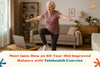
Telehealth exercise for seniors is changing what “staying active” looks like later in life — and it’s doing it in a way that’s practical, evidence-based, and surprisingly social. If getting to a clinic or gym feels harder than it used to, you’re not alone. Transport hassles, weather, low confidence, or simply not wanting to drive can slowly shrink your world.
The good news? Exercise doesn’t have to shrink with it. With a screen, a chair, and a safe space at home, older adults can keep building strength, balance, and momentum — without stepping outside the front door.
At Summit Health Solutions, we see this every week in our live online group sessions. Our Telehealth Exercise Program is designed for older adults and seniors who want to keep moving safely at home, with professional guidance and a supportive community. You can explore the program here: Summit Health Solutions Telehealth Group Exercise Program.
Why Telehealth Exercise for Seniors Works So Well
The core idea is simple: consistent movement keeps bodies and brains working better. What telehealth adds is access. When barriers to exercise disappear, people stick with it — and consistency is where the real health gains live.
Research from Liebert Publishing on telehealth-delivered exercise shows improvements in physical function for older adults, especially in mobility and strength. It also highlights something just as important: adherence tends to be high because people can do sessions in their own environment.

And it’s not only international evidence. Australian digital and home-based exercise programs focused on balance and functional strength have demonstrated improvements in balance and reductions in falls (OUP Academic).
So telehealth isn’t “second-best.” For many older adults, it’s the most realistic way to exercise regularly.
The Big Health Wins of Home-Based Online Exercise
1. Strength that protects independence
As we age, muscle mass and power decline unless we actively train them. That affects everyday tasks: stairs, groceries, getting up from a chair, or reaching overhead. Global movement guidelines from World Health Organization recommend regular muscle-strengthening activity for older adults because it preserves function and lowers disability risk.
Telehealth sessions that include safe strength themes (like sit-to-stands, controlled stepping, supported squats, or resistance work) can help maintain the strength you need for daily life.
2. Balance that prevents falls
Falls are rarely caused by “bad luck.” More often, they come from reduced balance reactions, weaker legs, and slower reflexes. The most effective falls-prevention programs combine balance and strength training — and they work whether delivered as a group or home routine. (RACGP).
Telehealth makes that training easier to access, and easier to keep up.
3. Mobility that keeps your world big
When you move better, you do more — and that loop feeds itself. Better mobility means more walking, more errands, more outings, more confidence. Telehealth works because it supports that loop through guided structure and gradual progress.
What Makes Group Telehealth Sessions Especially Powerful
A lot of people assume exercise motivation is purely personal. But for older adults, social connection is a huge driver of consistency.
Telehealth group exercise gives you:
-
A scheduled commitment you show up for
-
Friendly faces who notice if you’re missing
-
Shared progress that feels encouraging
-
A safe space to try things without judgement
One of our participants, Laurie, captured it perfectly:
“I love it. I don't have to go out, I'm just here at home and so that saves me a lot of time. I realized that by doing it, I'm maintaining at least a level of activity. If I didn't have that commitment I probably wouldn't do it.”
That “commitment effect” is real. It’s one reason online group programs can outperform solo home workouts in the long run.
Telehealth Exercise for Seniors — and for Adults 50+
While “senior exercise” is often framed around ages 65+, the shift toward earlier prevention matters. Many adults in their 50s and early 60s start noticing:
-
subtle balance changes
-
joint stiffness after sitting
-
reduced stamina
-
hesitation doing activities they once loved
Starting now helps avoid bigger declines later. Telehealth is a great on-ramp for this age group too: low-barrier, structured, and scalable to your current level.
How Summit Health Solutions Supports Safe Progress at Home
Our Telehealth Group Exercise Program is built around a simple principle: you don’t need fancy equipment or travel time to get meaningful results. You need:
-
professional guidance
-
progressive themes
-
a routine you can keep
-
a community that makes showing up easier
Each round focuses on key physical themes (strength, balance, mobility, endurance, coordination) so participants improve in a well-rounded way over time.
You might also enjoy our related blog, “Why Telehealth Cardio Workouts Boost Heart & Brain Health in Seniors” — it dives deeper into how aerobic training supports memory, mood, and cardiovascular resilience, and it pairs beautifully with the strength-and-balance focus in this program.
Getting Started: What You Need (and Don’t Need)
You don’t need:
-
to drive anywhere
-
to “already be fit”
-
a home gym
-
to exercise alone
You do need:
-
a safe clear space
-
a stable chair / bench nearby
-
comfortable clothes
-
willingness to start where you are
Many Australian falls-prevention resources emphasise that simple strength and balance exercises done regularly at home are effective and safe — especially when you have proper instruction.
Telehealth gives you that instruction in real time.
FAQs
1. Is telehealth exercise actually effective for seniors?
Yes. Studies show telehealth-delivered exercise improves physical functioning such as mobility and strength in older adults, and many programs report strong participation because sessions are accessible and convenient.
2. What kind of exercises are best for fall prevention?
The most effective programs mix balance and muscle strengthening — things like controlled stepping, sit-to-stands, heel-to-toe walking, and functional leg strength work. Multi-component routines reduce both fall risk and fall rate.
3. I’m in my 50s — is this program still for me?
Absolutely. Telehealth is ideal for adults 50+ who want to maintain strength, flexibility, and balance early, rather than waiting until problems become bigger. It’s easier to build capacity than to recover it later.
4. How often should older adults exercise each week?
Global guidelines recommend that older adults aim for 150–300 minutes of moderate activity weekly, plus strength training and balance work on multiple days. Telehealth sessions can help you meet those targets safely.
5. What if I have aches, chronic conditions, or low confidence?
That’s exactly who telehealth helps. Because sessions are guided and structured, you can work within your comfort level while steadily improving. If you’re unsure, check in with your GP for clearance before starting any new routine.
Telehealth exercise for seniors isn’t just a convenient alternative — it’s a proven way to maintain strength, balance, mobility, and confidence in a format that fits real life. When the hardest part of exercise is getting out the door, bringing the program into your lounge room can be the difference between “I should” and “I did.”
If you’d like to learn more or join a round, Summit Health Solutions’ Telehealth Group Exercise Program is ready to help you (or a loved one) move better from home — safely, steadily, and with people cheering you on.